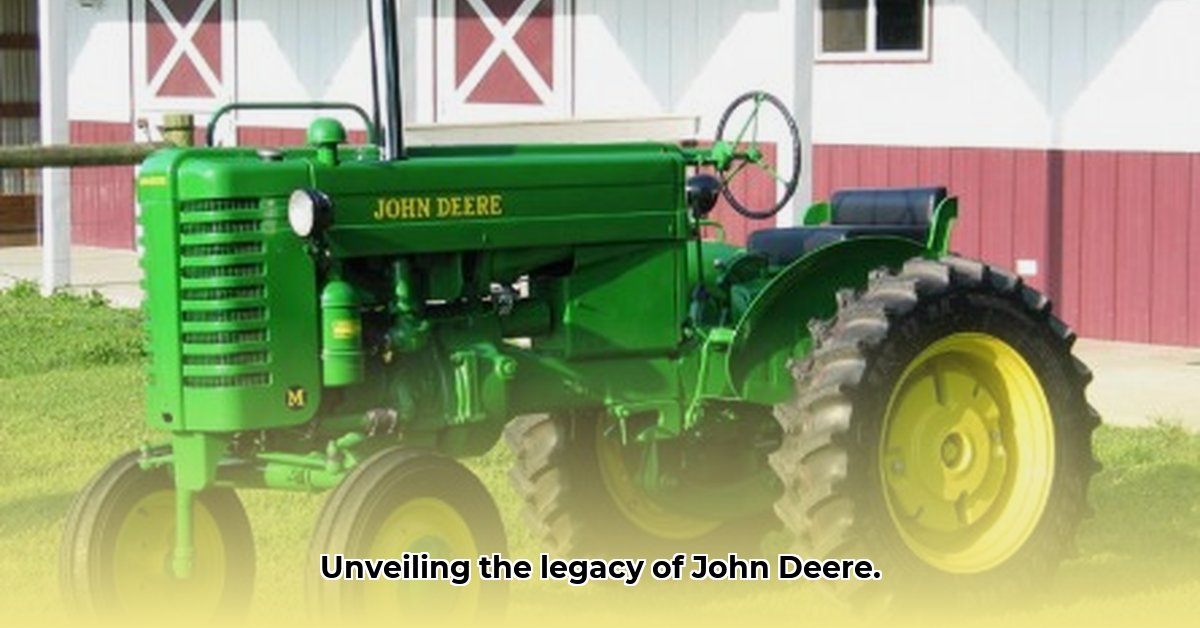
The iconic green and yellow of a John Deere tractor is more than just branding; it's a symbol deeply entrenched in the history of American agriculture and global food production. This article explores the remarkable journey of John Deere tractors, from their humble beginnings to their profound impact on modern farming practices and the ongoing quest for sustainable agriculture. We will examine the innovations, the unintended consequences, and the crucial role John Deere plays, and will continue to play, in shaping the future of food production. Learn more about classic models by visiting vintage Deere tractors.
From Steel Plows to Precision Farming: A Legacy of Innovation
John Deere's initial success wasn't with tractors, but with the revolutionary steel plow. Before Deere's invention in the mid-1800s, farmers struggled with cast-iron plows that constantly clogged in the heavy prairie soil. Imagine the back-breaking labor and frustration! Deere's steel plow, effortlessly slicing through the earth, transformed agriculture. It unlocked the potential of vast fertile lands, enabling farmers to cultivate significantly larger areas and dramatically increase crop yields. This seemingly simple invention sparked a revolution, laying the foundation for the mechanized farming practices we see today. How did this simple innovation change the landscape of agriculture? Food production increased exponentially, feeding burgeoning populations and contributing to unprecedented economic growth.
The Double-Edged Plow: Efficiency and Environmental Concerns
The transition from horse-drawn plows to tractors marked a pivotal shift in agricultural history. The gains in efficiency were astounding. Farmers could cultivate far more acres in a single day, significantly boosting food production. This was especially vital during times of war and population growth, ensuring food security for millions. However, this efficiency came at a cost. The reliance on fossil fuels introduced new environmental challenges. The intensive use of tractors, coupled with intensive tillage practices, contributed to soil erosion, nutrient depletion, and the compaction of soil, impacting long-term soil fertility and water infiltration. While the extent of this impact is still debated, the evidence of environmental consequences associated with increased agricultural production is compelling. This prompted researchers and engineers to examine these consequences and design more sustainable agricultural practices. Will this ongoing discussion ever end? Probably not, as new information and perspectives constantly emerge, prompting the agricultural sector to adapt and refine its strategies.
A Century of Refinement: Technological Advancements and Their Impact
The evolution of John Deere tractors has been a continuous process of refinement. Early models were relatively basic, yet robust machines. As technology advanced, so did the tractors. They became more powerful, efficient, and sophisticated, incorporating improved engines, hydraulic systems, and ultimately, GPS-guided technologies. Significant strides were made in reducing fuel consumption and optimizing the application of fertilizers and pesticides. Precision agriculture, using technologies such as GPS-guided tractors and sensors, allows farmers to precisely target inputs, minimizing waste and reducing environmental impact. For instance, fertilizer is applied only where needed, reducing runoff and soil contamination. However, the long-term sustainability impact of these technologies requires continued research and evaluation. The manufacturing process and the entire supply chain associated with producing these sophisticated machines also need careful consideration when evaluating their overall environmental footprint. What is the next technological leap in sustainable farming? Technological innovation continues at a rapid pace.
More Than Machines: Old John Deere Tractors and Their Enduring Appeal
The enduring allure of vintage John Deere tractors extends beyond their historical significance. These sturdy machines have become powerful symbols of a bygone era, representing a simpler way of life, a strong connection to the land, and a deep appreciation for skilled craftsmanship. A thriving collector's market has developed, with enthusiasts restoring and maintaining these older models, showcasing their passion for agricultural heritage. But restoring these machines also presents unique challenges—sourcing parts ethically, finding skilled mechanics, and ensuring the restoration process itself is environmentally conscientious. Why do people collect these older machines? Beyond the mechanical aspect, it's a connection to a slower pace of life, a time before mass production and technology dominated the landscape.
The Future of Sustainable Agriculture: A Collaborative Imperative
The future of sustainable agriculture hinges on continued innovation from companies like John Deere and a collective effort involving farmers, governments, NGOs, and consumers. The challenge is to feed a growing global population while minimizing environmental impact. This requires transitioning away from fossil fuels, adopting sustainable manufacturing processes, and embracing circular economy principles – minimizing waste and reusing resources. The focus is shifting from solely maximizing yields to optimizing resource use and reducing environmental footprints.
Key Actions for Sustainable Agriculture:
- Invest in Research and Development: Significant investment in sustainable fuels and improved fuel efficiency in tractors is needed.
- Adopt Precision Farming: Widespread adoption of precision farming technologies minimizes input use and optimizes resource management.
- Support Sustainable Practices: Government policies and financial incentives are vital to support the transition to regenerative agriculture.
- Embrace Circular Economy: Implementing circular economy principles throughout the agricultural supply chain minimizes waste and maximizes resource use.
- Consumer Awareness: Educating consumers about sustainable agriculture and responsible food choices is paramount.
The legacy of old John Deere tractors is multifaceted, reflecting both significant advancements in agricultural productivity and the inherent challenges of ensuring environmental sustainability. As we look ahead, understanding this legacy and embracing a collaborative approach is critical for securing food security for future generations while safeguarding our planet. The journey towards truly sustainable agriculture is a continuous process, and the work continues.